Scholar Spotlight: Shireen Hassim
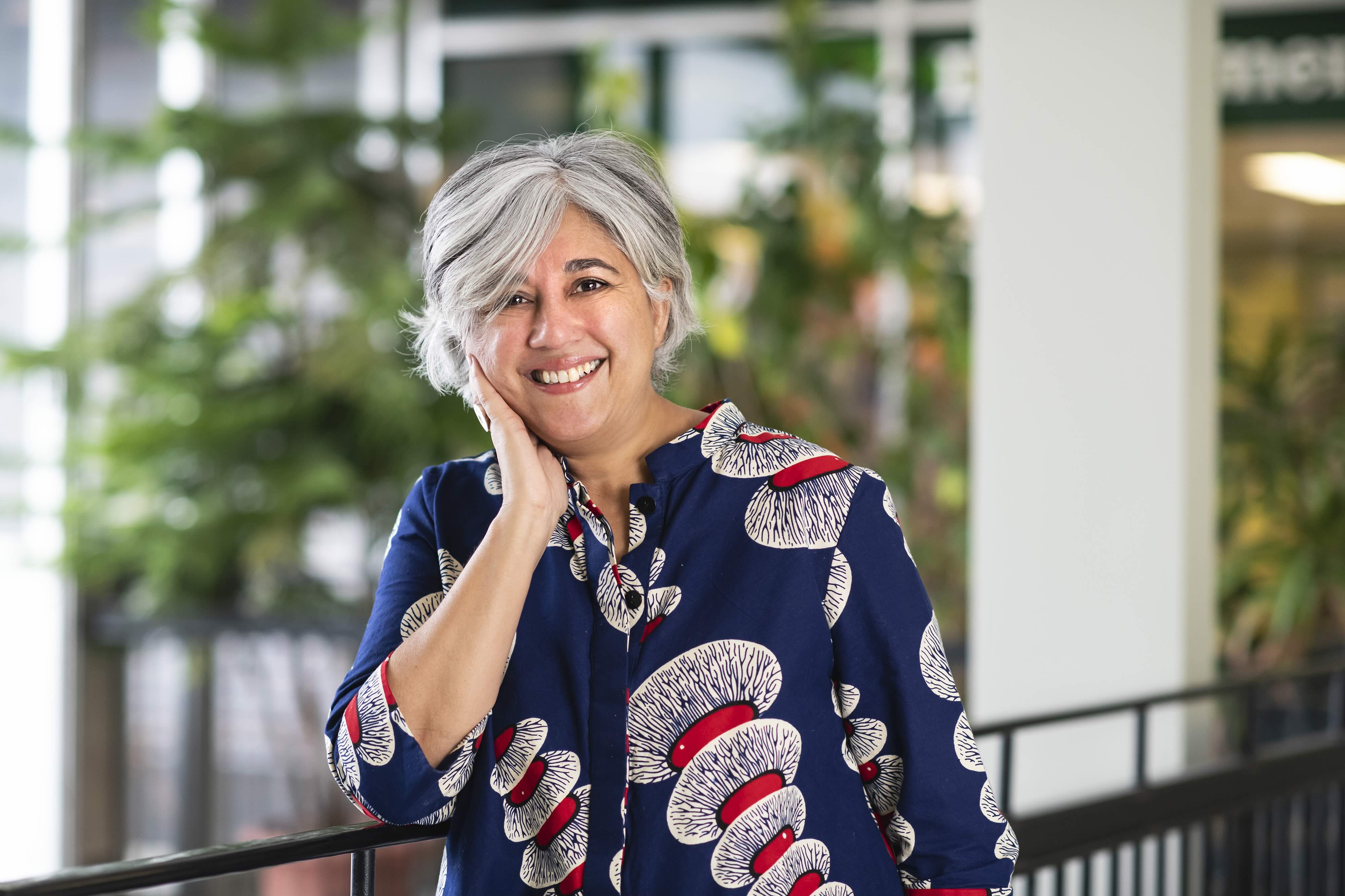
The Elite Africa Project would be nowhere without the work of talented scholars, both those who support the project and those who inspire our work. In this series, the Elite Africa Project interviews scholars about their work across different domains of power and what they think a deeper study of Africa’s elites can add to our understanding of the continent. Here is my interview with Professor Shireen Hassim, Canada 150 Research Chair in Gender and African Politics at Carleton University.
This is the seventh entry in our Scholar Spotlight series. You may also be interested in our previous interviews with Jeanne-Marie Jackson, Sishuwa Sishuwa, Nwando Achebe, Josias Maririmba, Dickson Eyoh, and Gerald Bareebe.
Let's get started with introductions. Perhaps you could start by telling us a little about your background and research interests.
Thank you, Nellie. I have conducted extensive research on women and the state, including women's participation in political movements, and explored how women have utilized representation to ensure that constitutions and policies reflect the ideals of gender equality. I've worked on these questions in a comparative sense, focusing on countries such as Uganda, Rwanda, South Africa, and Sweden. Generally speaking, I'm particularly interested in how women think about power, organize around it, and use their own power to advance equality agendas.
I'm glad you've talked about power because that's a key element of our work on elites in the various domains. In thinking about how power is exercised in different domains, how do you define or think about elites?
Elites are people who have proximity to power or are in a position to exercise power. I also think that elites can take different collective forms; for instance, you can have class elites, gender elites, or ethnic elites. But their defining feature for me is their proximity or access to power.
One group that we could add to the collective forms of elites is academic elites. In your work on gender and African politics, how and what kind of power do you think academics wield over how gender in African politics is presented and understood?
Academics are classically a group we would think about as being core to the cultural elite. But whether they have power or not depends on which academics we are talking about. For example, some academics are consultants to international agencies while others serve as consultants to their governments, and they may utilize their academic status to give greater heft to policy decisions. However, it is not always the case that they will be listened to, particularly in Africa, where governments might consider foreign expertise to be more important. So often, governments are much more likely to consult international development experts, or people from the World Bank, or the IMF than local academics. They have a class status and some societal respect, but there are constraints to their overall influence. As you are aware, academics in many African countries have been deliberately underfunded. Universities are underfunded, and academics are often perceived as a threat, creating a complicated relationship with political elites. A significant number of academics have to undertake consultancies and other activities to earn an income.
So, whereas I agree that academics are obviously part of societal elites, I don't think their power lies in relation to governments. I think the power may lie in giving language to the political phenomena around them, and, through an analysis of it, to enrich the public sphere.
So it's very different from, say, the United States, where academic jobs are very elitist and one can be a public intellectual who has some kind of influence in public debates. I think it's a lot harder in Africa.
Let’s unpack the point about organizations such as the World Bank and IMF being more influential in policymaking and decision-making in Africa. What extended role do you think Western-centric ideas play in the production and understanding of gender and politics in African contexts?
I find the term Western-centricity too broad to be helpful. The reason I say it's too broad to be insightful is that for many patriarchs in Africa, when women demand gender equality, they say “the West influences you.” In other words, it's used to diminish women's claims. So, I would want to break it down and say, well, what exactly do we mean by that?
My problem with the dominance of non-African consultants is that governments tend to assume that they know what is best. Yet many of those consultants view Africa as deficient, e.g., not being ready for democracy, or not having the expertise to govern, or not having the will to govern, or that they're just simply corrupt, right? Now, is that Westerncentricity or not? I'm not sure, but I feel like the word itself just gets thrown about in a way that I'm not comfortable with.
So, yes, any policies that keep Africa indebted to European countries are a problem. It's a problem, you know, of maintaining a permanent state of dependence, the failure to pay any reparations for colonial harms or colonial underdevelopment. That's the problem for me.
So, I would like us to be more specific about the debate you’re trying to address and to question whether African states are inherently different. For example, are African states particularly corrupt? Well, I think that there's corruption across the board. Is it particularly democratic? I don't think so. So, I hope you understand what I mean when I say I find the term to be a little woolly. And I would like us to get down to the nitty-gritty of what it is we are critiquing. Particularly when it comes to gender, I'm very, very wary because, you know, every demand women have made has been dismissed for so long as Western ideals that are not commensurate with African culture and African tradition, and so on. So it gets used as a weapon against feminists, and so I tend to be wary of it. Rather, examining ideas and their intent, or interrogating whether a particular proposal or theory speaks to us, is essential, especially because African states are often mistaken to be homogeneous. It's a continent. So many countries with many cultures. Actually, many more cultures than countries! So, this posing of Western centrism against African authenticity feels to be a very flat debate.
Speaking about ideas, one of the ideas that I was reflecting on as I was preparing for this interview was on African women in politics. We've done a couple of stories on countries in Africa that have increased women's representation and participation in politically influential positions. Namibia, for example, has recently been in the news for decreasing the gender gap in government. Can we take these as signals that perceptions of African women in politics and leadership positions have evolved over the decades?
I am very critical of using the number of women in government as a mark of significant progress. In my research, I have found that it’s a very low-cost way of thinking that political parties are taking issues of gender equality seriously. And so, often, what I’ve found is that it doesn’t even require a democracy for more women to get into government. Uganda and Rwanda are both good cases of undemocratic and authoritarian political systems with great numbers of women in politics. In fact, my work has argued that the large number of women in the Rwandan parliament after the genocide was at least in part because of the capacity of the male elite to impose that. So, it's not a sign of a democratic form of incorporation of women. But at the same time, of course, it does visually matter. If you have governments in which women are substantially underrepresented, there is clearly a democratic deficit and crisis of representation because one group disproportionately has power to make decisions for everybody. So I think if you want to use mechanisms such as gender quotas to break that down, it’s not a bad thing, but we must not assume that counting women in government is a proxy for stronger democracy. Because very often, those governments with lots of women in positions of power - and I can put my own South African government amongst them - have wonderful statements about equality but go on to govern in ways that make women more unsafe, poorer, and shift the burden of care to them.
So, representation matters, but it's an inadequate indicator. We must have more than that if we are concerned about redistribution of gender power. Additionally, we know that many women get into political office through these mechanisms but have absolutely no sense of accountability to the constituencies they claim to represent.
I think that's an important reflection point because representation of women is often politicized, right? So, it becomes political fodder for different parties, and it can be misused.
Yeah, in a way, the fact that it became political fodder was good for women, for improving representation. Because one party could change the other, right? In feminist political theory we say that it has a contagion effect. So, in that sense, politicization is a good thing if it forces reluctant parties to step up in the political competition. But it's still an inefficient measure of gender equality.
Let’s shift gears briefly towards women and social movements. One of the pieces that I encountered as I was preparing for this interview was a conversation you had with Laura Richardson and Emma Kendrick where you vividly describe your experience at the forefront of activism while you were a student at the University of Durban Westville. One of your books also tells the story of celebrated anti-apartheid activist, Fatima, whose scholarly ideas helped to contextualize race and gender in the South African context and to describe the impact of imperialism on Black South Africans. So, based on your lived experience and your academic work, what are some reflections you'd have on the role of women in organizing in social movements?
Yeah, what can I say about women’s activism? Women have always been mobilizing against their oppression. It's not a new phenomenon. And, as you know, they were very active in the anti-colonial period, and they remained engaged in the post-colonial period. Firstly, it’s important to recognize that there are many movements, each with its own shape and form. Some of them are feminist, some are not feminist. Some are radical, whereas others are conservative. My master's research, for example, was on the Inkatha Women's Brigade, which was a conservative women's movement that was about protecting women in a way that validated only their role in the family, rather than demanding structural change and attitudinal change in how women are perceived and treated in the society. So, they're prepared to accept that women have a subservient role in the family.
Across the continent, there are conservative religious women’s organizations. Sometimes these can coalesce into a social movement that is quite conservative. I've tended to study radical social movements or those that are challenging the basis of economic and political power and making the connection to patriarchy, as a system embedded in capitalism and colonialism. In other words, no theories of colonialism and capitalism can be effective without including gender as a significant variable. Not just as an add-on, but something that structures the nature of the society. For example, by putting people in their different places in society, it determines who should get what, who should do what work, who should earn what, who can move around at night and who can't, etc. You know, these sorts of questions. What feminists do is put together these interlocking systems and show how they work. It's because of that understanding of interlocking systems that we can say that having women among the political elites doesn't mean that poor women will be represented. And we can only understand that once we step outside of thinking it's only patriarchy that's the issue and begin to see that it's also a capitalism and class system problem. For instance, elite women have economic interests that are not the same as those of poor women, and this understanding helps us think critically about what they do when they are in power. It comes as no surprise, therefore, that they don't always represent poor women.
We often think that if you're a woman, you should care about all women, right? But no, you may be a woman who is concerned about her self-advancement. A woman who sees herself as part of an economic elite is only interested in further extraction of profits associated with her elite status. So, if she wants a place at that table, it doesn’t mean that she's representing all women. A feminist lens applied to social movements that have emerged in Africa, particularly in the 20th century, means that we understand that it’s race, class, and gender together, not just one system. It’s not just thinking about women’s participation in anti-colonial movements, but it’s also critically analysing how colonialism established a certain hierarchy of power.
African women have recently organized social protests, such as the ones seen in Kenya, to raise awareness and to demand action from the government against the huge case load of femicide. From this example, I think sometimes mobilizing social movements is a matter of life and death. Would you say that in moments like these, women’s collective action can transcend traditional social hierarchies of power, status, or rank?
Well, that’s a good insight of yours, that sometimes it is a matter of life and death. And there are issues such as femicide on which women can transcend their class differences, right? Because violence against women affects you regardless of your economic status. It affects you regardless of whether you're the chief's wife or the wife of a mere clansman. So, violence against women is one of those issues that creates the basis for a cross-class, cross-ethnic, cross-race movement of women. There are a few more kinds of social movements that unite women with common interests.
So, there are still some lingering questions about what policies these social movements want to put forward. How do you want to move? Where do you want to go with it? There are conservative women's movements whose response to that violence will be things like we must ban alcohol, or we must do virginity testing. Instead, they blame women for demanding too much, or they blame women for wearing certain kinds of clothing, or, you know, so their response to it is to retreat to a much more traditional notion of women as respectful and submissive. These are all solutions that feminists would say are missing the root cause of the problem. Whereas a feminist approach to that would go in a different direction. So even with regard to common issues, there are differences in what they would see as the cause, and what they would see as the solutions to the problem.
Finally, are there any books or articles that you would recommend for our audience?
There's a spate of books coming out now from African feminists that I think are worth exploring. There's a new book by Selina Makana titled Beyond the Battlefield: Women and the Nation in Twentieth-Century Angola (Athens: Ohio University Press, 2026). Other recommended reads on the topic of gender and political elites include:
- Bauer, Gretchen, and Hanna E. Britton, eds. Women in African Parliaments. Boulder, CO: Lynne Rienner Publishers, 2006.
- Bauer, Gretchen, and Manon Tremblay, eds. Women in Executive Power. London: Routledge, 2011.
- Tamale, Sylvia Rosila. When Hens Begin to Crow: Gender and Parliamentary Politics in Contemporary Uganda. Minneapolis: University of Minnesota Press, 1999.
- Madsen, Diana Højlund, ed. Gendered Institutions and Women’s Political Representation in Africa. London: Bloomsbury Publishing, 2020.
- Gouws, Amanda, ed. Feminist Institutionalism in South Africa: Designing for Gender Equality. New York: Bloomsbury Publishing USA, 2022.
- Tripp, Aili Mari. Why African Autocracies Promote Women as Leaders. Oxford: Oxford University Press, 2025.
My own work:
- Goetz, Anne Marie, and Shireen Hassim, eds. No Shortcuts to Power: African Women in Politics and Policy Making. London: Zed Books, 2003.
- Hassim, Shireen. “Perverse Consequences? The Impact of Quotas for Women on Democratization in Africa.” In Political Representation, edited by Ian Shapiro, Susan C. Stokes, Elisabeth Jean Wood, and Alexander S. Kirshner, 211–235. Cambridge: Cambridge University Press, 2010.
- Hassim, Shireen. Global Challenges to Gender Equality in Care Work." In Gender Equality: Transforming Family Divisions of Labor, edited by Janet C. Gornick and Marcia K. Meyers, 315–322. New York: Verso, 2009.